
Is Muse available in the UK? Yes. Compare the Muse 2 and Muse S Athena EEG meditation headbands on UK price and biofeedback, plus what the research says.
The Muse 2 headband costs around £240 in the UK and is a daytime meditation and focus headband. Muse S Athena costs around £405 to £425 and adds overnight sleep tracking and a second type of brain sensor. Both are available from Muse’s own UK store and from UK retailers such as Amazon UK and Healf.
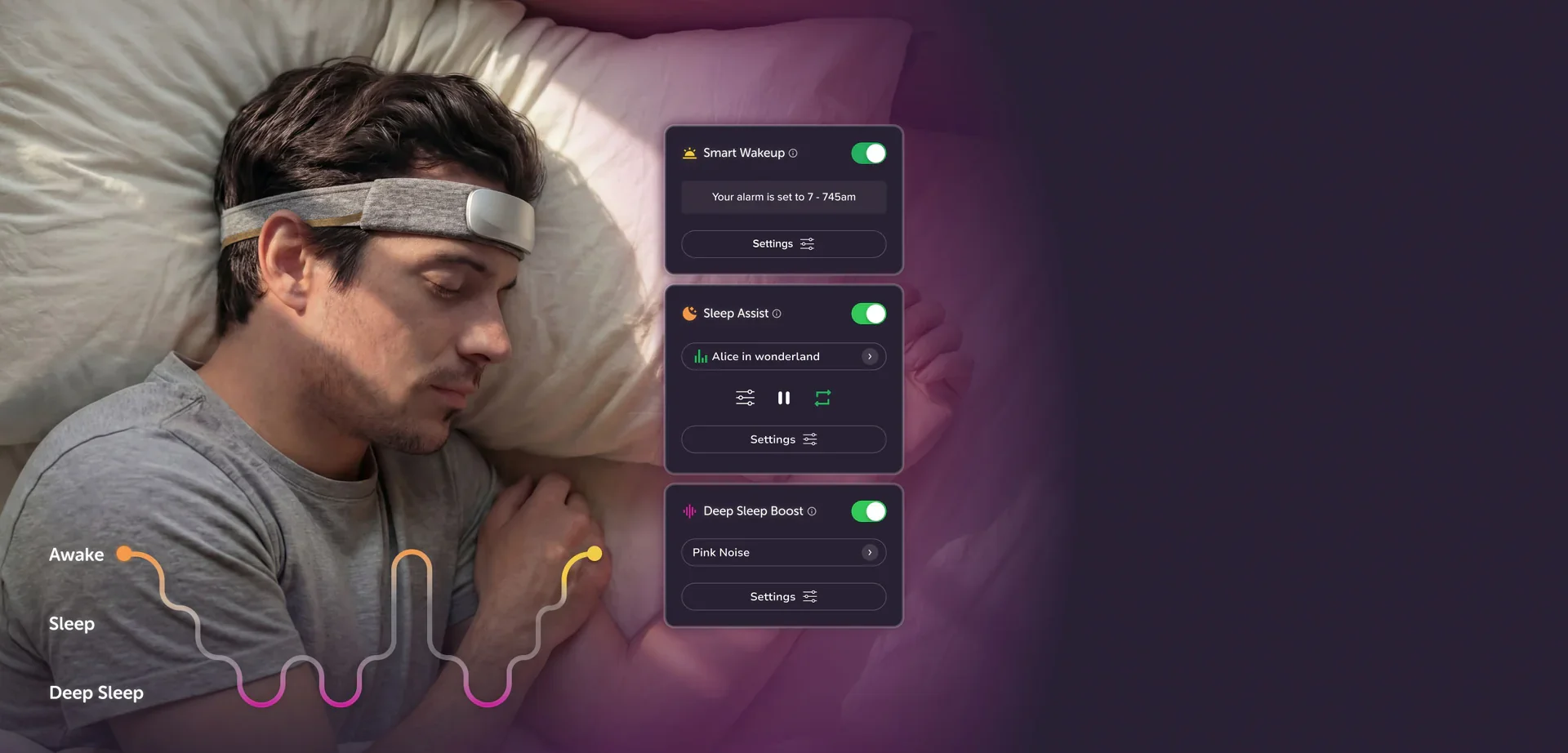
Muse headband in 30 seconds
- What it is: a consumer EEG headband that turns your brain activity into sound while you meditate, so you can hear when your mind wanders.
- Who makes it: InteraXon, a neurotechnology company based in Toronto, Canada.
- Which to buy: Muse 2 for daytime meditation on a budget. Muse S Athena if you also want sleep tracking.
- Evidence: independent studies show Muse records real brain signals and stages sleep well against a hospital sleep test, but it is a wellness device, not a medical one.
Save 15% on Muse 2 and Muse S Athena with the code EKG at the official Muse store. Includes a 30-day return period and 1-year warranty.
What is the Muse EEG headband?
Muse, sold as “the brain sensing headband”, is a lightweight EEG (electroencephalography) headset that you wear across your forehead and behind your ears. Dry sensors pick up the tiny electrical signals your brain produces. The Muse app turns those signals into sound in real time. When your mind is settled you hear calm weather and birdsong. When your attention drifts the weather picks up, which is your cue to come back to the breath.
That loop is called biofeedback, or neurofeedback when the signal comes from the brain. Most people know meditation is good for them, but struggle to tell whether they are actually doing it. Muse gives you that missing feedback during the session and a score afterwards.
Muse is made by InteraXon, founded in Toronto in 2007 by Ariel Garten and Chris Aimone. The first Muse headband launched in 2014. Muse 2 followed in 2018 and added heart, breath, posture and movement sensing. Muse S Athena arrived in March 2025 as the first consumer headband to pair EEG with fNIRS, a light-based sensor that tracks blood oxygen in the front of the brain (Muse / Business Wire, 2025).
Where the sensors sit
Muse 2 records from four EEG channels: two on the forehead (AF7 and AF8) and two behind the ears (TP9 and TP10), with a reference sensor in the centre of the forehead. The electrodes are gold, the band weighs 38.5 g and it fits heads roughly 30 to 35 cm from ear to ear (Muse 2 specifications). Four channels is a small number next to a hospital EEG cap, which is why Muse focuses on overall states such as calm and sleep stages rather than detailed brain mapping.
Is Muse available in the UK?
Yes. There are three sensible places to buy a Muse headband in the UK:
- The official Muse store. Muse runs a UK storefront with pricing in pounds. It offers a 30-day return period and a 1-year warranty, and our code EKG takes 15% off.
- Amazon UK. Muse S Athena is listed at £424.99 including VAT.
- Healf. The UK wellness retailer stocks both models, with Muse 2 at £239.99 and Muse S Athena at £404.49, plus a 365-day returns policy.
- Marketplaces such as eBay. Cheaper, but often older models or used units with no warranty. Fine for tinkering, risky as a main purchase.
Whichever you choose, check the model name. The older Muse S (Gen 2) and the original 2014 Muse still circulate, and neither is the current Muse S Athena.
Muse 2 vs Muse S Athena
The official Muse shop now lists two headbands. Both use the same core idea, EEG biofeedback during meditation, but they are built for different routines.
| Feature | Muse 2 | Muse S Athena |
|---|---|---|
| Build | Rigid polycarbonate band | Soft fabric band, comfortable lying down |
| EEG brain sensing | Yes, 4 channels | Yes |
| fNIRS (blood oxygen in the frontal cortex) | No | Yes |
| Heart rate, breath, movement | Yes | Yes |
| Overnight sleep tracking | No | Yes, EEG sleep stages |
| Sleep Assist, Deep Sleep Boost, Smart Wakeup | No | Yes |
| Muse Brain Age | Yes | Yes |
| Muse list price | $249.99 | $474.99 |
| UK stockist price | £239.99 | £404.49 to £424.99 |
Muse 2 headband
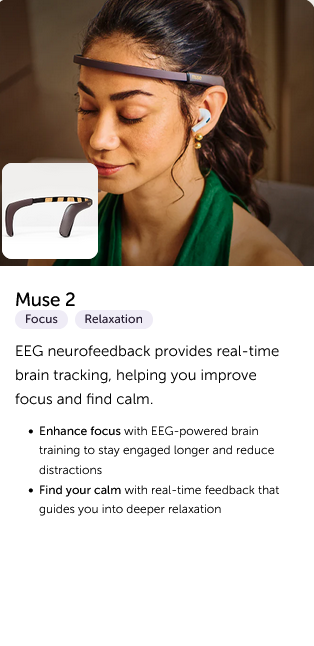
Muse 2 is the straightforward choice. You sit down with headphones on and the app guides you through a session while reading your brainwaves, heart rate, breathing and posture. It is light and quick to set up, and Muse quotes up to 10 hours of use per charge, which covers a couple of weeks of daily ten-minute sessions.
Buy Muse 2 if you want a meditation or focus tool for the daytime and do not need sleep data. Skip it if you hope to wear it in bed. The rigid band is uncomfortable lying on your side.
Muse S Athena headband
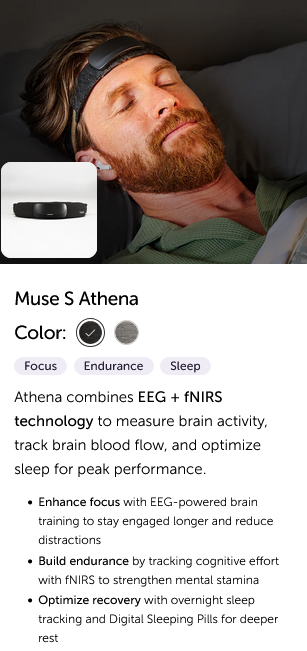
Muse S Athena is the flagship. The soft band is designed to be worn overnight, and the extra fNIRS sensor measures how much oxygen the front of your brain is using. Muse uses that to score mental effort, for example in a game where you steer an owl’s flight purely by concentrating.
At night Athena stages your sleep from EEG, plays adaptive soundscapes to help you drift off (Sleep Assist), adds precisely timed sound during deep sleep (Deep Sleep Boost) and tries to wake you from a light stage (Smart Wakeup). For a deeper look at the hardware, see our home neurofeedback devices guide, where Athena is our top pick.
Buy Muse S Athena if sleep is part of the reason you are buying, or you want the newest brain-training features. Skip it if you only meditate for ten minutes in the morning. Muse 2 does that job for roughly £165 to £185 less.
Decided which Muse suits you? Code EKG takes 15% off either headband.
Muse headband price in the UK
Expect to pay about £240 for Muse 2 and £405 to £425 for Muse S Athena at full price. Muse also sells each headband in a bundle with a year of Muse Premium, which is cheaper than buying the two separately.
Premium is optional. The free app covers the core meditations and, on Athena, sleep tracking. Premium adds the larger library of guided sessions and weekly Muse Brain Age readings, plus the AI coach. Try the free version for a few weeks before committing.
Muse discounts are seasonal, with the biggest cut usually in November. If you can wait, our Muse Black Friday deals page tracks this year’s sale.
How accurate is Muse? What the research says
This is the question that matters most with any consumer EEG, and Muse has more published research behind it than most rivals. Here is what the independent and company-linked studies show, and where their limits lie.
It records genuine brain signals
In 2017 researchers at the University of Victoria tested whether a Muse could capture event-related potentials, the small, precisely timed brain responses that labs normally measure with expensive wired systems. Using only a Muse and a laptop, they reliably detected the N200 and P300 responses, plus a reward-related signal, across two classic experiments (Krigolson et al., Frontiers in Neuroscience, 2017). In plain terms, the headband picks up real brain activity, not just muscle noise.
It sees patterns at population scale
A study of 6,029 Muse users aged 18 to 88 found the expected age-related shifts in EEG, including a gradual, year-by-year slowing of the brain’s peak alpha frequency (Hashemi et al., eNeuro, 2016). Those findings match decades of lab research, which suggests the data is consistent enough to be useful. Three of the authors worked for InteraXon, which is worth knowing.
Sleep tracking holds up against a hospital sleep test
The strongest independent evidence covers sleep. Researchers at the University of Ottawa and the Royal Ottawa Mental Health Centre had 56 adults sleep in a lab wearing a Muse S alongside full polysomnography, the clinical gold standard. A technologist scored the hospital recording blind to Muse’s results. Overall agreement was substantial (Cohen’s kappa 0.76), near-perfect for REM sleep and wake, and weakest for the lightest stage of sleep. Muse slightly overestimated deep sleep, by about 15 minutes a night on average (SLEEP Advances, 2026).
Measuring the brain directly is what gives Muse an edge over wrist and ring trackers, which infer sleep stages from movement and heart rate. It still is not a diagnosis. If you suspect a sleep disorder, speak to your GP.
Meditation benefits are real but modest
A small randomised trial at the University of Toronto gave healthy adults six weeks of daily ten-minute Muse sessions and compared them with an active control group doing online maths practice. The Muse group improved on an attention test and reported fewer physical stress symptoms. Several secondary measures showed no difference, and each group had only 13 people (Bhayee et al., BMC Psychology, 2016). Two of the co-authors worked for InteraXon. The fair summary is that Muse-guided meditation helps a bit, and that larger trials are still needed.
The limits
- Four EEG channels cover the forehead and the area behind the ears only. Muse cannot map the whole brain.
- Good contact matters. Hair or a loose fit adds noise, and the app will ask you to adjust.
- Muse is sold as a general wellness device. It does not diagnose or treat any condition.
- Athena’s fNIRS features are newer, and so far most claims about them come from Muse itself rather than independent studies.
Muse meditation headband: how the biofeedback works
Most UK buyers looking for a meditation headband end up comparing Muse with a plain meditation app, and the brain feedback is where Muse earns its price. A typical session lasts three to twenty minutes. You pick a soundscape and focus on your breath with your eyes closed. The app shows afterwards how much time you spent calm versus active, and how many “birds” you earned for long stretches of calm.
Beyond the mind sessions, Muse 2 and Athena offer heart, breath and body biofeedback, so you can train a slower breath or practise sitting still. That variety is the main difference between a Muse and a plain meditation app. If you want to compare Muse with research-oriented headsets, our Muse vs EMOTIV guide covers that in detail.
Muse sleep headband
Only Muse S Athena is designed for sleep. You put it on at bedtime with a sleep soundscape playing, and the band records your night. In the morning you see your sleep stages, how often you woke, how long you slept and your sleep position. Deep Sleep Boost uses closed-loop sound, a technique sleep researchers have studied for years, timed to your slow brainwaves.
Comfort is personal. Most people get used to it within a few nights, but if you hate wearing anything on your head in bed, factor that into the 30-day return window.
Can Muse help with stress or anxiety?
Muse can make a meditation habit easier to keep, and meditation is a well-established way to manage everyday stress. It is not a treatment for an anxiety disorder, and it does not replace talking therapy or medical care. If anxiety is affecting your daily life, speak to your GP. In England you can also refer yourself to NHS Talking Therapies.
Muse for developers, and Muse headband alternatives
Muse is a popular low-cost EEG for university teaching and brain-computer interface (BCI) projects, largely thanks to studies like the Krigolson paper above. Third-party apps such as Mind Monitor can stream raw EEG from Muse 2 to a computer. If raw data access is your priority, though, a headset designed for developers may suit you better. See our best EEG headsets in the UK for options from EMOTIV and OpenBCI. Weighing Muse against the light-based Mendi headband instead? See our Mendi vs Muse comparison.
Our verdict
For most UK buyers who want a meditation headband, Muse 2 remains the best value. It is proven and costs about £240. If you also care about sleep, or want the newest brain-training features, Muse S Athena is the better buy and the only Muse that tracks your night. Both are backed by more published research than any other consumer EEG headband we cover, provided you treat them as wellness tools and not medical devices.
Ready to try Muse? Save 15% with code EKG, with 30 days to return it if it is not for you.
Muse headband FAQ
Is Muse available in the UK?
Yes. Muse 2 and Muse S Athena are sold through Muse’s UK store in pounds, and by UK retailers including Amazon UK and Healf.
Who makes the Muse headband?
InteraXon, a neurotechnology company in Toronto, Canada, founded in 2007 by Ariel Garten and Chris Aimone.
What is the difference between Muse 2 and Muse S Athena?
Muse 2 is a rigid daytime meditation headband with EEG plus heart, breath, posture and movement sensing. Muse S Athena is a soft band you can sleep in. It adds fNIRS sensing and EEG sleep tracking, and costs roughly £165 to £185 more.
How many EEG sensors does Muse have?
Muse 2 records four EEG channels, two on the forehead and two behind the ears, plus a reference sensor.
Does Muse need a subscription?
No. The headband works with the free Muse app. Muse Premium is optional. It adds extra guided content and weekly Brain Age, plus the AI coach and progress trends.
Is Muse a medical device?
No. Muse is a general wellness product. Independent research shows its EEG and sleep data are reasonably accurate, but it does not diagnose or treat any condition.
Can I use Muse 2 for sleep tracking?
No. Overnight sleep tracking and the sleep features are only available on Muse S Athena.
How long does the Muse 2 battery last?
Muse quotes up to 10 hours of continuous use per charge, which covers a couple of weeks of short daily sessions.
How we researched this guide
eeg.org.uk has covered consumer EEG and neurofeedback since 2021. For this guide we read the peer-reviewed studies on Muse listed below and checked Muse’s own specifications and launch material. We also checked Muse’s list prices against UK stockists Amazon UK and Healf. Where a claim comes from Muse rather than independent research, we say so. We earn a commission if you buy through our links, at no extra cost to you, and that never decides our verdict. See our affiliate disclosure, or read more about eeg.org.uk.
Sources
- Krigolson OE et al. Choosing MUSE: Validation of a low-cost, portable EEG system for ERP research. Frontiers in Neuroscience, 2017
- Hashemi A et al. Characterizing population EEG dynamics throughout adulthood. eNeuro, 2016
- Assessing the performance of a portable electroencephalographic sleep monitor against level 1 polysomnography. SLEEP Advances, 2026
- Bhayee S et al. Attentional and affective consequences of technology supported mindfulness training. BMC Psychology, 2016
- Muse by Interaxon. Introducing Muse S Athena. Business Wire, March 2025
- Muse: official store and Muse 2 specifications