
The best EEG headsets you can buy in the UK, from Muse S Athena to EMOTIV, NeuroSky and OpenBCI, compared on price, comfort, signal quality and ease of use.
Consumer EEG headsets have moved well beyond the lab. People now use them for meditation and sleep tracking, and for university projects and building brain-computer interfaces (BCI). None of them replaces a clinical EEG in hospital, but the best are good enough to have been validated against research equipment in peer-reviewed studies. Prices run from about $130 to several thousand, so the right choice depends on what you want to do with the headset once it is on your head.
| Headset | Best for | EEG channels | Typical price |
|---|---|---|---|
| Muse S Athena | Best overall: meditation, sleep, beginners | 4, plus fNIRS | £405 to £425 |
| Muse 2 | Best value consumer EEG | 4 | About £240 |
| EMOTIV Insight | Developers and students | 5 | $499 |
| NeuroSky MindWave Mobile 2 | Cheapest way to start | 1 | About $130 |
| OpenBCI Cyton | Research and custom builds | 8 to 16 | From about $1,000 (board only) |
Our top pick: Muse S Athena. The easiest EEG headset to use, with a 30-day return period. Save 15% with code EKG.
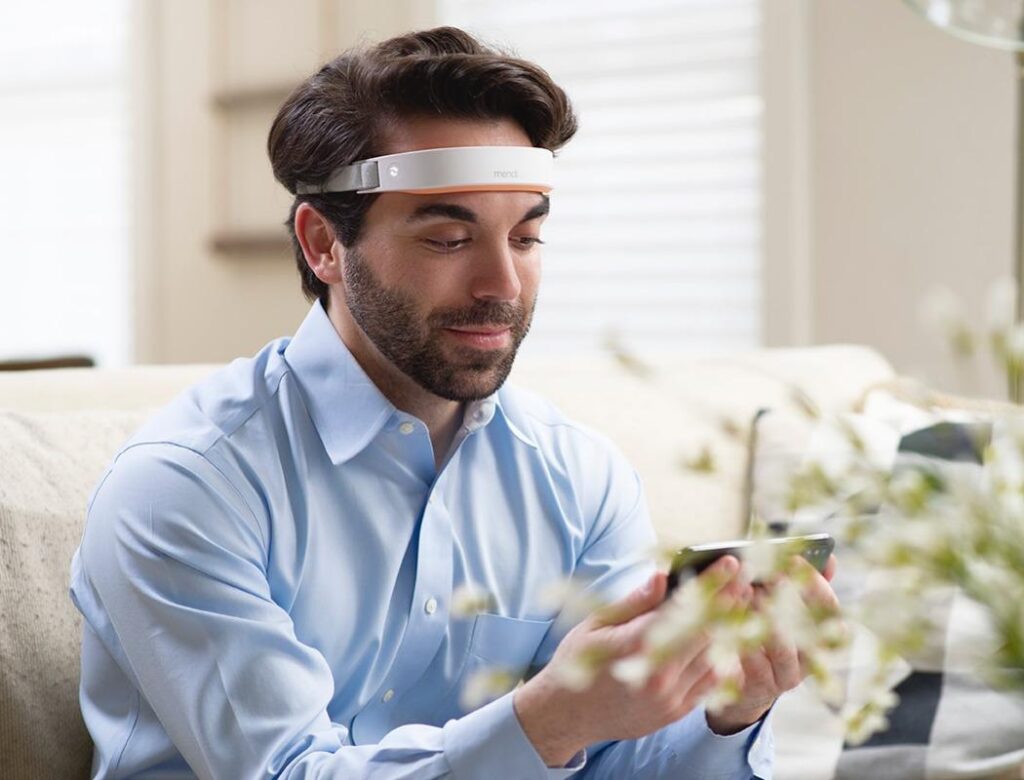
Our picks at a glance
- Best overall EEG headset: Muse S Athena. Polished app and sleep tracking, backed by the strongest everyday research record.
- Best value: Muse 2. The same core EEG feedback as Athena for about £165 to £185 less.
- Best for developers: EMOTIV Insight. Five channels at standard positions and mature BCI software.
- Best budget EEG headset: NeuroSky MindWave Mobile 2. One sensor, but a validated signal for very little money.
- Best for research: OpenBCI Cyton. Open hardware with research-grade signal quality, if you can build and configure it.
1. Muse S Athena review: best EEG headset overall
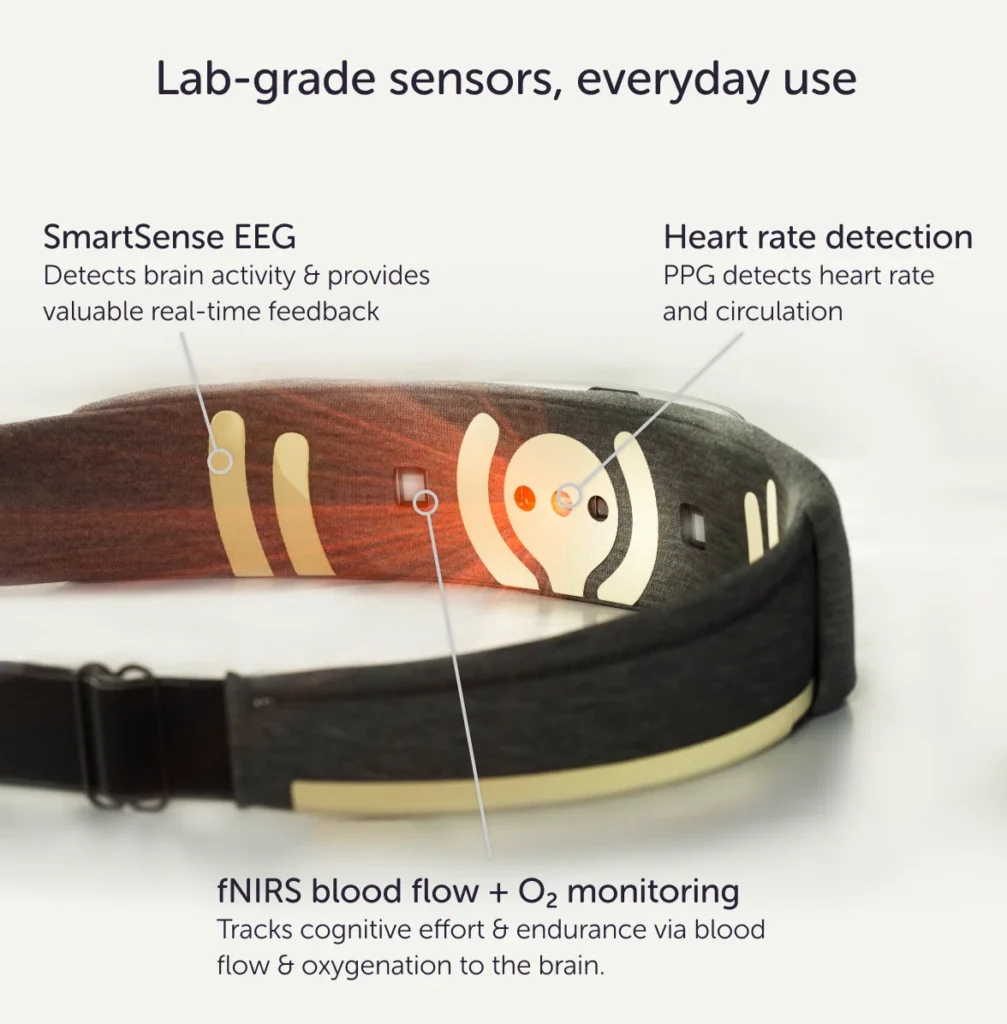
Muse S Athena is the EEG headset we would recommend to most people. It is a soft fabric band with four EEG channels on the forehead and behind the ears, sampling at 256 Hz, plus fNIRS, a light-based sensor that tracks blood oxygen in the front of the brain. It pairs with the Muse app on iPhone or Android and turns your brain activity into sound while you meditate. Calm brings birdsong. A busy mind brings wind and rain.
It is also the only headset here built to be worn overnight. Athena stages your sleep from brain signals and plays sound cues timed to deep sleep. That claim is backed up: in a 2026 University of Ottawa study, Muse sleep staging reached substantial agreement with full hospital polysomnography (SLEEP Advances, 2026). Earlier work at the University of Victoria showed a Muse could capture classic lab brain responses using nothing more than a laptop (Krigolson et al., Frontiers in Neuroscience, 2017).
- Pros: easiest setup of any EEG headset, comfortable for long sessions, sleep tracking, strong UK availability.
- Cons: fixed training programmes, and raw data needs third-party apps such as Mind Monitor.
- Price: about £405 to £425. Premium subscription optional.
For specs and more on the research, see our Muse headband UK guide.
Muse S Athena or Muse 2? Both take the 15% EKG code at the official Muse store.
2. EMOTIV Insight review: best EEG headset for developers
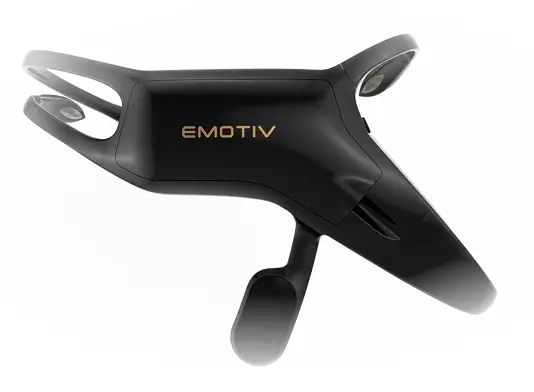
The EMOTIV Insight is aimed at people who want to work with the EEG signal rather than be guided through it. Its five semi-dry sensors sit at standard EEG positions, covering the temples and the back of the head as well as the forehead. Battery life runs to 20 hours, and EMOTIV’s software and SDK make it a common choice for university projects and BCI experiments such as controlling a computer with trained mental commands.
The catch is software cost. The free tier shows processed metrics, but exporting raw EEG needs a paid EmotivPRO plan, listed at $149 a month or $89 a month paid annually (EMOTIV). It also runs from a computer or tablet rather than a phone. Our full EMOTIV Insight review compares it with Muse in detail.
- Pros: standard sensor positions, long battery life, strong developer tools.
- Cons: raw data costs extra, and the learning curve is steeper than Muse.
- Price: $499 from EMOTIV.
Need more coverage? EMOTIV’s 14-channel EPOC X costs $999 to $1,199. An earlier EPOC model recorded auditory brain responses that closely matched a lab-grade system in an independent Macquarie University study (Badcock et al., PeerJ, 2013).
3. NeuroSky MindWave Mobile 2 review: best budget EEG headset
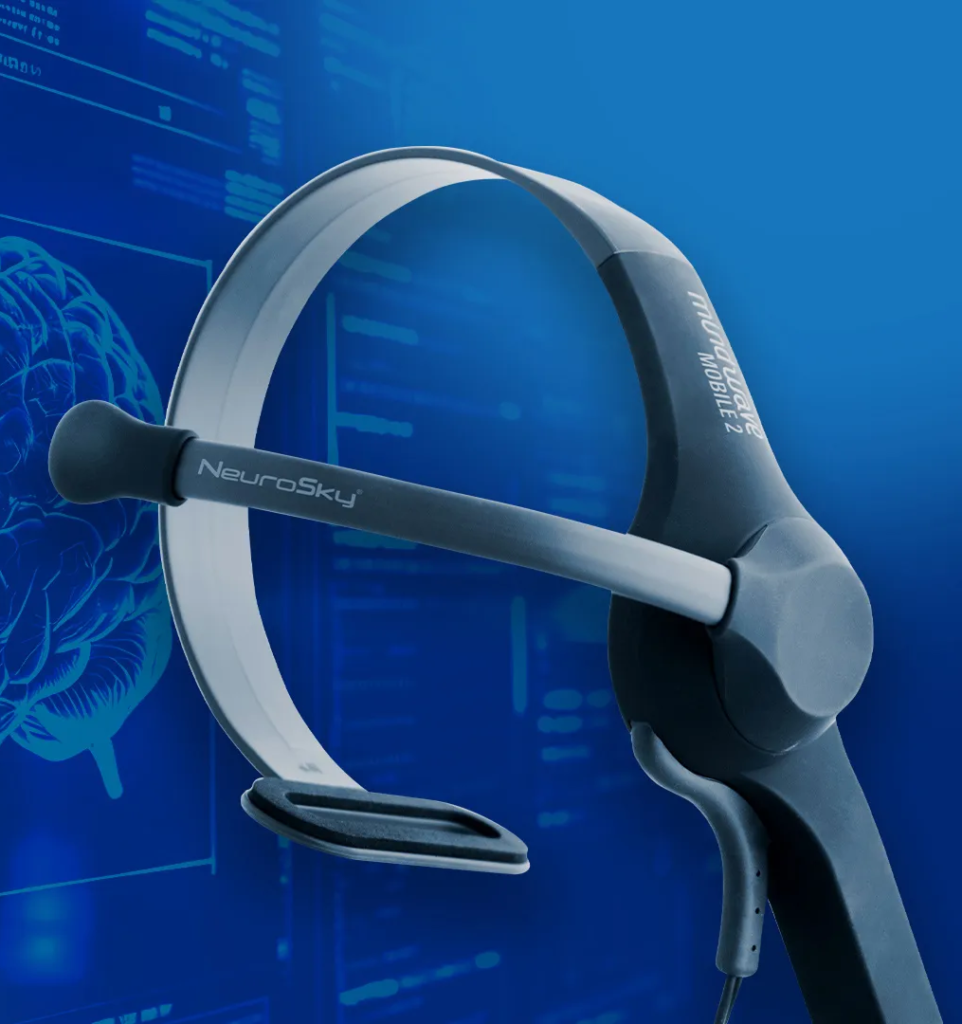
The MindWave Mobile 2 is the cheapest credible EEG headset, at about $130. It uses a single dry sensor on the forehead plus an ear clip, and outputs simple attention and meditation scores alongside the raw signal. That is enough for basic neurofeedback games and for learning how EEG works.
One channel is limiting, but the signal itself is real. Spanish researchers recorded the MindWave alongside a medical-grade ambulatory EEG for over an hour and found the two signals were significantly correlated, although the MindWave was noisier (Rieiro et al., Sensors, 2019).
- Pros: very cheap, simple setup, no subscription.
- Cons: single channel, noisier signal, basic build quality.
4. OpenBCI Cyton review: best EEG platform for research
OpenBCI is not really a headset in the consumer sense. The Cyton is an open-source biosensing board with 8 channels, or 16 with the Daisy add-on, which you pair with electrodes and a 3D-printed or ready-made Ultracortex headset. Everything is documented and programmable, which is why it is popular in university labs and BCI projects.
Its signal quality stands up. A 2026 study recorded the Cyton and a Brain Products research amplifier at the same time and found the Cyton captured highly similar, though not identical, scalp EEG across several brain responses (D’Amico and de Sa, Sensors, 2026).
Budget carefully. OpenBCI lists the Cyton board at roughly $1,000 to $1,250 and a complete Ultracortex headset from about $3,000. Expect assembly and configuration at a computer before you see useful data.
- Pros: research-grade signal, fully open, expandable to 16 channels.
- Cons: expensive once complete, and not for beginners.
Also worth considering
- Muse 2: four-channel EEG with heart and breath feedback for about £240. No sleep tracking or fNIRS.
- EMOTIV EPOC X: 14 channels with saline sensors for serious research, at $999 to $1,199.
- Neurosity Crown: eight dry channels and an open developer kit with no raw-data subscription, at around $1,499.
- EEG headphones and earbuds: Neurable builds EEG into premium headphones, and EMOTIV sells MN8 earbuds. Discreet for all-day wear, but sensors in or around the ear capture less than a headset.
If your main goal is brain training rather than the EEG itself, our guide to the best home neurofeedback devices also covers fNIRS headbands such as Mendi.
EEG headset comparison
| Muse S Athena | EMOTIV Insight | MindWave 2 | OpenBCI Cyton | |
|---|---|---|---|---|
| Ease of use | ★★★★★ | ★★★☆☆ | ★★★★☆ | ★★☆☆☆ |
| Signal quality | ★★★★☆ | ★★★★☆ | ★★☆☆☆ | ★★★★★ |
| Comfort | ★★★★★ | ★★★☆☆ | ★★★☆☆ | ★★☆☆☆ |
| Meditation and sleep | ★★★★★ | ★★☆☆☆ | ★★☆☆☆ | ★☆☆☆☆ |
| Research and BCI | ★★☆☆☆ | ★★★★☆ | ★★☆☆☆ | ★★★★★ |
| Value for money | ★★★★★ | ★★★☆☆ | ★★★★★ | ★★★☆☆ |
Which EEG headset is easiest for beginners?
Muse. Both Muse 2 and Muse S Athena use dry sensors, pair with a phone in about a minute and guide you with sound, so you never need to read a brainwave graph. The NeuroSky MindWave is also simple to put on, but its apps are more basic. EMOTIV and OpenBCI assume you are comfortable with computer software and some EEG theory.
What is the best portable EEG?
For everyday use, Muse S Athena. It is light and runs from a phone, with up to 10 hours per charge. If portability means taking research-quality EEG outside the lab, the EMOTIV Insight (five channels, 20-hour battery) or EPOC X (14 channels) are the stronger choices. A full OpenBCI rig is technically portable, but setup makes it impractical away from a desk.
How do EEG headsets compare for comfort?
Comfort decides whether you keep using a headset, so it matters almost as much as the signal. Muse S Athena is the most comfortable, because it is a soft fabric band you can even sleep in. Muse 2 is light at under 40 g but rigid. The MindWave’s ear clip and forehead arm can feel awkward after 20 minutes. EMOTIV’s semi-dry sensors press through the hair at the back of the head, and the EPOC X needs wet felt pads. The OpenBCI Ultracortex uses hard comb electrodes and is the least comfortable for long sessions.
Which portable EEG offers the best signal quality?
Among the headsets here, OpenBCI’s Cyton gives the most lab-like signal, followed by EMOTIV’s EPOC X and Insight, which cover more of the head at standard EEG positions. Muse records cleanly from fewer, well-placed sensors and has the best evidence for sleep. NeuroSky’s single dry sensor is the noisiest. In practice, good contact matters more than the spec sheet: hair and movement degrade any dry-electrode headset.
Best EEG headset for your budget
- Under £100 to £150: single-channel headsets such as the NeuroSky MindWave Mobile 2, or a used Muse 2.
- About £240 to £425: Muse 2 and Muse S Athena, the sweet spot for most home users.
- About $500: EMOTIV Insight, plus software if you want raw data.
- $1,000 and up: research headsets such as EMOTIV EPOC X and OpenBCI, aimed at research and development.
For a fuller breakdown of what each type costs, see our guide to EEG headset prices. Factor in running costs before you buy. Muse Premium is optional, EmotivPRO is effectively required for raw EEG, and OpenBCI needs electrodes and a headset frame on top of the board.
Which EEG headset should you choose?
- Choose Muse S Athena if you are new to EEG and want meditation or sleep tracking with no technical setup.
- Choose EMOTIV Insight if you want to record and analyse EEG or build a BCI.
- Choose NeuroSky MindWave if you are on a tight budget or want a teaching tool.
- Choose OpenBCI Cyton if you need research-grade data and are comfortable configuring hardware.
What to look for before buying an EEG headset
- Channels: four or five are plenty for consumer use. Research usually needs eight or more.
- Dry or wet sensors: dry sensors are quicker. Wet or saline sensors give better contact but take preparation.
- Software costs: check what is free and what needs a subscription, especially for raw data.
- Platform: Muse runs from a phone, while EMOTIV and OpenBCI are built around a computer.
- Returns: fit varies from head to head, so buy where you can return it. UK online purchases carry a 14-day cancellation right by law, and Muse offers 30 days.
- Import charges: EMOTIV and OpenBCI ship from abroad, so check whether VAT and duty are included at checkout.
Should you buy a used EEG headset?
Used headsets can save a lot, particularly on EMOTIV or OpenBCI hardware. Check that every sensor and cable is included, that the headset can still be registered with the maker’s software and that the battery holds charge. Be wary of listings described as “compatible” with OpenBCI or EMOTIV: these are often unofficial clones without support.
Are consumer EEG headsets medical devices?
No. Every headset in this guide is sold for wellness or research use. They can show broad brain states and support meditation or neurofeedback, but they cannot diagnose epilepsy or any other condition. If you have a medical concern, speak to your GP.
Our verdict
For most UK buyers, the Muse S Athena is the best EEG headset: easy to use, comfortable, well researched and the only one here that tracks sleep. Muse 2 is the best value. Choose the EMOTIV Insight if you want to work with the data, the NeuroSky MindWave Mobile 2 if budget comes first, and OpenBCI if you need a research platform.
Start with the headset most people should buy. Save 15% on Muse S Athena and Muse 2 with code EKG.
EEG headset FAQ
What is the best EEG headset?
Muse S Athena is the best EEG headset for most people because it is easy to use and comfortable, and it also tracks sleep. EMOTIV Insight is better for developers and OpenBCI for research.
Which mobile EEG system is easiest for beginners?
Muse. Its dry sensors need no gel, it pairs with a phone in about a minute and the app guides you with sound.
What is the best portable EEG machine?
Muse S Athena for everyday use. For research-quality data on the move, EMOTIV Insight or EPOC X.
Which portable EEG has the best signal quality?
OpenBCI Cyton gives the most lab-like signal, followed by EMOTIV’s EPOC X and Insight. Muse has the best evidence for sleep staging.
Can an EEG headset diagnose medical conditions?
No. Consumer EEG headsets are wellness and research tools, not medical devices.
How we chose the best EEG headsets
eeg.org.uk has covered consumer EEG since 2021. For this guide we compared each headset’s published specifications, running costs, comfort and UK availability, and read the independent validation research for each brand, listed below. Where a figure comes from a manufacturer, we say so. We may earn a commission when you buy through some of our links, such as Muse and Amazon, at no extra cost to you, and we recommend other brands where they are the better tool. See our affiliate disclosure, or read more about eeg.org.uk.
Sources
- Krigolson OE et al. Choosing MUSE: validation of a low-cost, portable EEG system for ERP research. Frontiers in Neuroscience, 2017
- Assessing the performance of a portable EEG sleep monitor against level 1 polysomnography. SLEEP Advances, 2026
- Badcock NA et al. Validation of the Emotiv EPOC EEG gaming system for measuring research quality auditory ERPs. PeerJ, 2013
- Rieiro H et al. Validation of EEG recordings obtained with a consumer-grade, single dry electrode, low-cost device. Sensors, 2019
- D’Amico A, de Sa VR. Comparing simultaneous scalp EEG recordings from the OpenBCI Cyton and Brain Products BrainAmp. Sensors, 2026
- EMOTIV: EmotivPRO licensing