
Compare the best neurofeedback devices for home use, from Muse S Athena and Mendi to EMOTIV and Neurable headphones, with UK prices and the evidence.
Home neurofeedback means wearing a sensor that reads your brain activity and turns it into sound or a game in real time, so you can learn to steer your own mental state. It is a form of biofeedback that uses brain signals. A few years ago that meant a clinic visit. Today a headband costing £230 to £430 does a simplified version on your sofa. The catch is that these devices are built for very different people, from first-time meditators to developers who want raw EEG data, so the best one depends on what you want from it.
| Device | Best for | Sensor | Typical price |
|---|---|---|---|
| Muse S Athena | Best overall, beginners, sleep | EEG + fNIRS | £405 to £425 |
| Mendi | Focus training, no subscription | fNIRS | £229 to £279 |
| Muse 2 | Best value EEG neurofeedback | EEG, 4 channels | £240 |
| Myndlift + Muse | Coached, personalised programme | EEG (Muse) | Kit plus monthly plan |
| Neurable MW75 Neuro | Neurofeedback headphones for work | EEG in ear cushions | From $499 |
| EMOTIV Insight | EEG data and experimenting | EEG, 5 channels | $499 |
| EMOTIV EPOC X | Advanced home EEG and research | EEG, 14 channels | $999 to $1,199 |
| NeuroSky MindWave Mobile 2 | Budget starter | EEG, 1 channel | About $130 |
Our top pick: Muse S Athena. The easiest home neurofeedback device to start with, and the only one that also tracks your sleep from brain signals. Save 15% with code EKG.
1. Muse S Athena: best home neurofeedback device overall
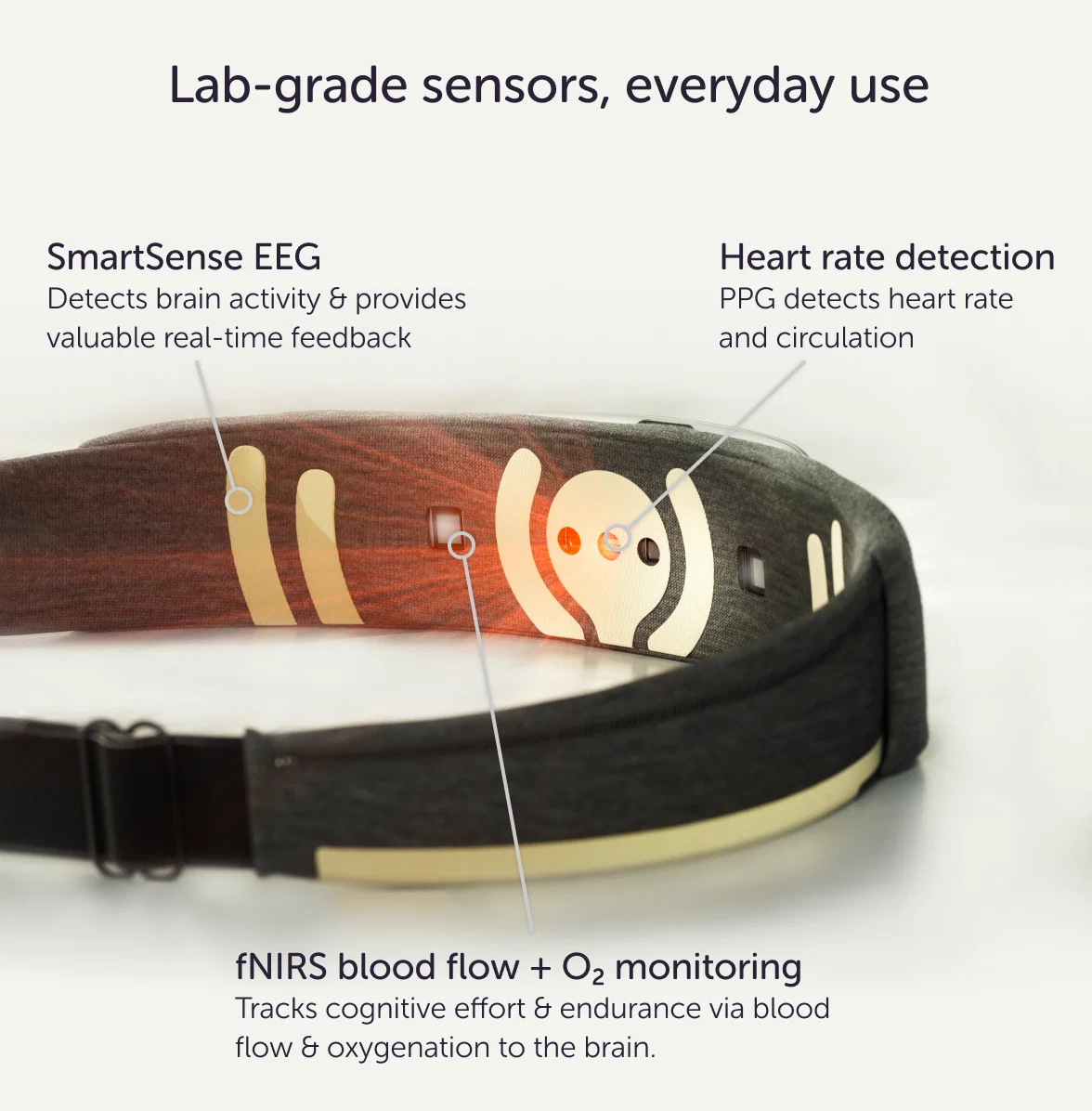
Muse S Athena is the device we would hand to almost anyone trying neurofeedback at home for the first time. It is a soft fabric headband with EEG sensors on the forehead and behind the ears, plus fNIRS, a light-based sensor that tracks blood oxygen in the front of the brain. Put it on and open the app, and within a minute you are in a session where calm brain activity brings birdsong and a busy mind brings wind and rain.
What lifts it above the rest is breadth. The same band does daytime neurofeedback, a mental-effort game driven by the fNIRS sensor, and overnight sleep tracking with sound cues timed to deep sleep. Muse also has more published research behind it than any other consumer headband. Its sleep staging, for example, reached substantial agreement with a hospital sleep test in a 2026 University of Ottawa study (SLEEP Advances).
- Price: about £405 to £425, or less with code EKG and in the Muse Black Friday sale.
- Subscription: optional. The free app covers core sessions and sleep tracking.
- Downsides: the training protocols are fixed, so you cannot design your own. Raw data access needs third-party apps.
- Best for: beginners, plus anyone who wants meditation and sleep in one device.
For specs and the full research summary, see our Muse EEG headband guide.
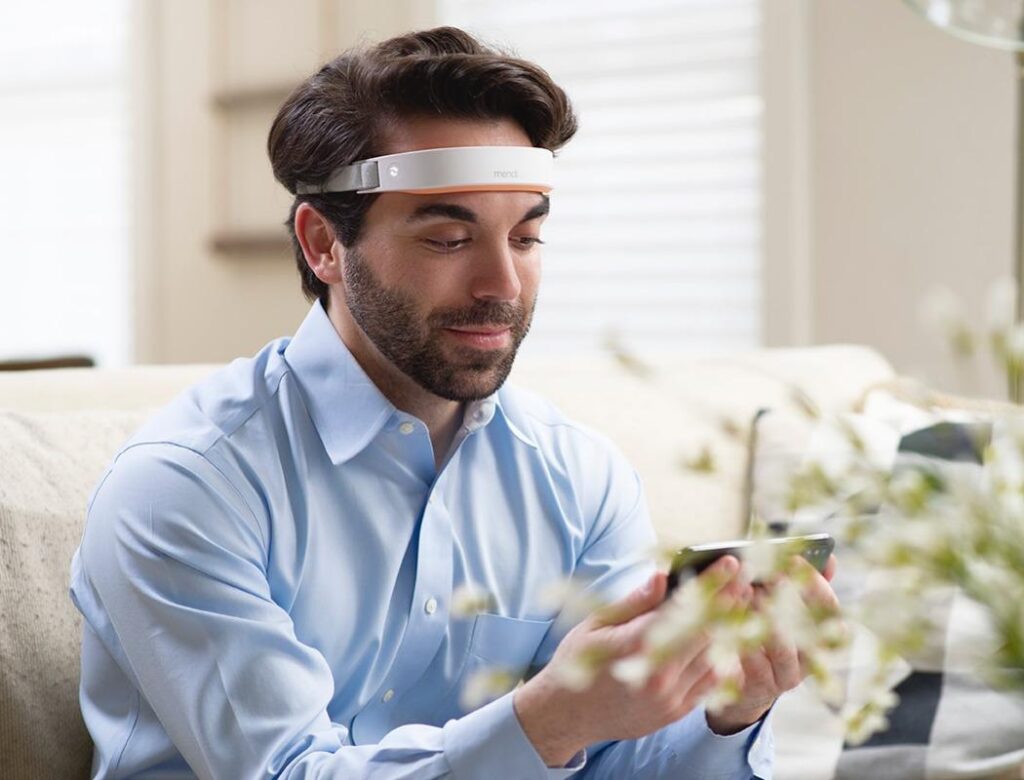
2. Mendi: best fNIRS neurofeedback headband
Mendi, made by a Swedish company founded in 2016, takes a different route. Instead of EEG it uses fNIRS alone, shining near-infrared light through the forehead to measure blood oxygen in the prefrontal cortex, the area involved in focus and self-control. You train by keeping a ball floating on screen in the app. Hold your concentration and it rises.
Mendi’s selling point is simplicity. There is no gel and no fiddly fit, and the price includes lifetime app access with no subscription. The method has a sound research base. A systematic review of 22 fNIRS-neurofeedback studies found people can learn to regulate these signals, while noting that most trials were small (Kohl et al., Frontiers in Neuroscience, 2020). Mendi has not published a clinical trial of its own headband, so treat claims about specific benefits with care.
- Price: £229 direct from Mendi in the UK, or around £279 on Amazon UK.
- Downsides: it measures one brain region only and does not track sleep. Mendi itself advises training in a dimly lit room, because fNIRS is sensitive to light.
- Best for: people who want short, game-like focus training without an ongoing fee. See how it stacks up in our Mendi vs Muse comparison.

3. Muse 2: best value EEG neurofeedback
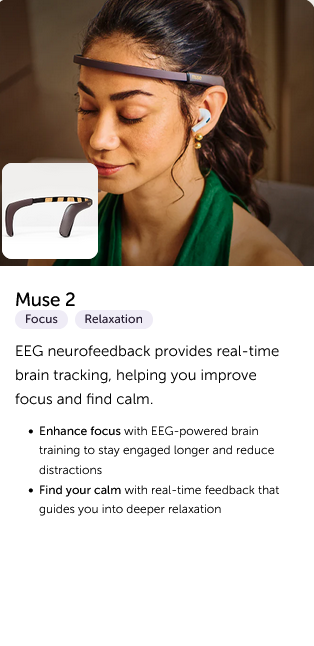
Muse 2 gives you the same core EEG neurofeedback as Athena for about £165 to £185 less. It reads your brain through four EEG channels and adds heart, breath, posture and movement feedback. What you lose is the fNIRS sensor and everything to do with sleep, because the rigid band is not built for wearing in bed.
The EEG itself is well validated. University of Victoria researchers showed that a Muse could capture classic lab brain responses using nothing more than a laptop (Krigolson et al., Frontiers in Neuroscience, 2017). It also works with Myndlift, below.
- Price: about £240.
- Best for: daytime neurofeedback and meditation on a tighter budget.
Muse 2 or Muse S Athena? Both take the 15% EKG code at the official Muse store and come with a 30-day return period.
4. Myndlift with Muse: best coached home neurofeedback
Myndlift is not a headset. It is a neurofeedback platform that runs on a Muse and, on its coached plans, adds a human Neuro Coach who assesses you and builds a personalised training protocol. That is much closer to clinic-style neurofeedback than a standard consumer app, and you never leave the house. It works with every current Muse headband, including Muse 2 and Muse S Athena.
By Myndlift’s own published pricing, kits start at $199, with a self-guided plan from $29 a month and coached plans around $150 a month (Myndlift). That makes it the most expensive option over a year, but still far cheaper than weekly clinic sessions.
- Best for: anyone who wants a structured programme with professional oversight rather than an app on its own.
5. Neurable MW75 Neuro: best neurofeedback headphones
If you would rather not wear a headband at all, Neurable hides EEG sensors inside the ear cushions of premium Master & Dynamic headphones. You wear them as normal noise-cancelling headphones while you work, and the app tracks focus and mental fatigue and nudges you to take breaks. The newer, lighter MW75 Neuro LT launched at $499, against $699 (£629 in the UK) for the original model.
This is passive tracking more than active training, and most of the accuracy evidence so far comes from Neurable itself. Battery life also drops to around 10 to 13 hours with brain tracking switched on. Still, they are the most natural way to bring neurofeedback into a working day.
- Best for: desk workers who want focus tracking built into headphones they would use anyway.
6. EMOTIV Insight: best for EEG data at home
EMOTIV Insight is a five-channel wireless EEG headset with semi-dry sensors, priced at $499. It sits between consumer headbands and research systems. You get more coverage of the head than a Muse and access to EMOTIV’s software for viewing and recording your brain data, which is why it appeals to students and people building brain-computer interface (BCI) projects.
The trade-off is polish. There is no Muse-style guided meditation experience out of the box, and the more useful software tiers cost extra. If you are weighing the two brands directly, our Muse vs EMOTIV comparison goes into detail.
- Best for: people who care more about the EEG data than a guided app.
7. EMOTIV EPOC X: best advanced home EEG system
The EPOC X steps up to 14 EEG channels using saline-soaked felt sensors. EMOTIV’s own pages list it at $999 to $1,199. It is the most capable system here and the one with the deepest research track record. An earlier EPOC model recorded auditory brain responses that closely matched a lab-grade Neuroscan system in a validation study (Badcock et al., PeerJ, 2013).
For home neurofeedback it is overkill for most people. Setup takes longer, the sensors need wetting before each session, and you will need third-party neurofeedback software to get the most from it. Choose it if research-quality data matters more than convenience.
8. NeuroSky MindWave Mobile 2: best budget option
NeuroSky’s MindWave Mobile 2 costs about $130 and uses a single dry sensor on the forehead plus an ear clip. One channel is enough for basic attention and relaxation games, and it is the cheapest way to see whether EEG feedback interests you. Macrotellect’s BrainLink headsets fill the same niche. Do not expect the signal quality or app support of a Muse.
If your budget is under £100, a used Muse 2 can sometimes be found for around that, and it is a better device than any new single-channel headset. For more budget and developer options, see our guide to the best EEG headsets in the UK.
Neurofeedback headphones and earbuds
Brain sensing is moving into things people already wear (see our overview of EEG headphones and headbands). Beyond Neurable’s headphones, EMOTIV sells MN8 EEG earbuds with two channels for $399 and has added newer MW20 earbuds. Earbuds and headphones are discreet and comfortable for long periods, but sensors in or around the ear pick up less of the brain than a headband across the forehead. For stress relief and meditation, a headband still gives clearer feedback. Earbuds suit passive tracking during the day.
Which neurofeedback device is easiest for beginners?
Muse is the easiest. Both Muse 2 and Muse S Athena use dry sensors, pair with a phone in a minute and guide you with sound rather than graphs. Mendi is equally simple to use but measures a narrower signal. EMOTIV headsets and research-style kits take longer to set up and assume you are comfortable with software. If comfort over long sessions matters, a soft band such as Athena or a pair of Neurable headphones beats a rigid plastic headset.
Does home neurofeedback work? What the evidence says
There are two separate questions here. Do these devices measure real brain activity? And does training with that feedback change anything that matters to you?
On the first, the answer is broadly yes for the established brands. Muse and EMOTIV headsets have both reproduced lab-grade brain responses in peer-reviewed studies, and Muse’s sleep staging holds up against hospital polysomnography. fNIRS devices such as Mendi rest on a smaller but growing body of research.
On the second, the picture is more mixed. People clearly can learn to shift their brain signals with feedback. Whether that translates into lasting benefits is less certain, and the evidence is strongest for general wellbeing goals such as relaxation and meditation practice, not for treating conditions.
Neurofeedback for ADHD
ADHD is the most common medical reason people look for a neurofeedback device, so it deserves a straight answer. A 2025 meta-analysis of 38 randomised trials, led by researchers at King’s College London and the University of Southampton, found no meaningful improvement in ADHD symptoms when outcomes were rated by people who did not know who had received neurofeedback (Westwood et al., JAMA Psychiatry, 2025). A small benefit appeared only in trials using well-established clinical protocols. Consumer headbands are not designed or approved to treat ADHD. If you are considering neurofeedback for ADHD, speak to your GP or specialist first.
Home neurofeedback vs clinic neurofeedback
Clinic neurofeedback usually starts with a qEEG brain map using 19 or more sensors, followed by a course of sessions with a trained practitioner who sets and adjusts the protocol. Consumer devices skip the assessment and use fixed protocols on far fewer sensors. That makes them cheaper and more convenient, but they are not the same treatment.
There are middle routes. Coached platforms such as Myndlift bring a practitioner into your home training remotely. Some UK practitioners also rent out clinical NeurOptimal systems for use at home, usually by the month. Both cost more than a headband on its own, but less than a long course of in-person sessions.
What to look for in a home neurofeedback device
- Sensor type: EEG reads electrical activity and suits relaxation and attention training. fNIRS reads blood oxygen and tolerates movement better, but covers a smaller area.
- Channels: more channels give a wider view of the brain, but four well-placed channels are plenty for home training.
- Software: the app decides what you can actually do. Check which training programmes come included and which need a subscription.
- Comfort: you will only see results if you train regularly, so a device you dislike wearing is wasted money.
- Data access: developers and researchers should check whether raw EEG is available or locked inside a proprietary app.
- Returns: fit varies from head to head. Muse offers 30 days, and UK online purchases carry a 14-day cancellation right by law.
Our verdict
For most people, the Muse S Athena is the best home neurofeedback device. It is easy to use and well researched, and it covers daytime training and sleep in one band. Mendi is the pick if you want focused, game-like training with no subscription, and Muse 2 is the best value way into EEG neurofeedback. Add Myndlift if you want a coach to guide the process. Choose EMOTIV if you are more interested in the brain data itself.
Start with the device most people should buy. Save 15% on Muse S Athena and Muse 2 with code EKG.
Home neurofeedback FAQ
Can I do neurofeedback at home?
Yes. Consumer headbands such as Muse and Mendi let you do simplified neurofeedback training at home with a phone app. For a personalised protocol, coached services like Myndlift add a remote practitioner.
What is the best home neurofeedback device?
Muse S Athena is the best all-round choice because it is easy to use and combines EEG with fNIRS. It also tracks sleep. Mendi and Muse 2 are cheaper alternatives.
Which neurofeedback device is easiest for beginners?
Muse. Its dry sensors need no gel, it pairs with a phone in about a minute and the app guides you with sound, so there is nothing technical to learn.
Is home neurofeedback the same as clinic neurofeedback?
No. Clinics usually start with a full qEEG brain map and a practitioner sets your protocol. Home devices use fixed protocols on fewer sensors, although coached services such as Myndlift add remote professional guidance.
How much does home neurofeedback cost?
Expect about $130 (roughly £100) for a basic single-channel headset, £230 to £430 for Mendi or Muse, and $1,000 or more for a 14-channel research headset. Coached programmes add a monthly fee.
Is home neurofeedback safe?
Consumer EEG and fNIRS devices only read signals from your head. They do not send electrical current into the brain, so the physical risk is minimal. They are not medical devices, and they should not replace treatment for any condition.
Is neurofeedback effective for ADHD?
The best current evidence says no at group level. A 2025 meta-analysis of 38 trials found no meaningful improvement in ADHD symptoms when assessors were blinded. Speak to your GP or specialist before trying it for ADHD.
Do I need a subscription?
Not for Muse or Mendi. Muse’s free app covers core training, with Premium optional, and Mendi includes lifetime app access. Myndlift’s coaching and some EMOTIV software do charge ongoing fees.
How we chose these devices
eeg.org.uk has covered consumer EEG and neurofeedback since 2021. For this guide we compared each device’s sensors, software, subscription costs and UK availability, and read the peer-reviewed research behind each technology, listed below. Where a claim comes from a manufacturer rather than independent research, we say so. We earn a commission on some links, including Muse and Amazon, at no extra cost to you, and that never decides our ranking. See our affiliate disclosure, or read more about eeg.org.uk.
Sources
- Westwood SJ et al. Neurofeedback for attention-deficit/hyperactivity disorder: a systematic review and meta-analysis. JAMA Psychiatry, 2025
- Kohl SH et al. The potential of fNIRS-based neurofeedback: a systematic review. Frontiers in Neuroscience, 2020
- Krigolson OE et al. Choosing MUSE: validation of a low-cost, portable EEG system for ERP research. Frontiers in Neuroscience, 2017
- Badcock NA et al. Validation of the Emotiv EPOC EEG gaming system for measuring research quality auditory ERPs. PeerJ, 2013
- Assessing the performance of a portable EEG sleep monitor against level 1 polysomnography. SLEEP Advances, 2026
- Myndlift: neurofeedback devices and pricing